
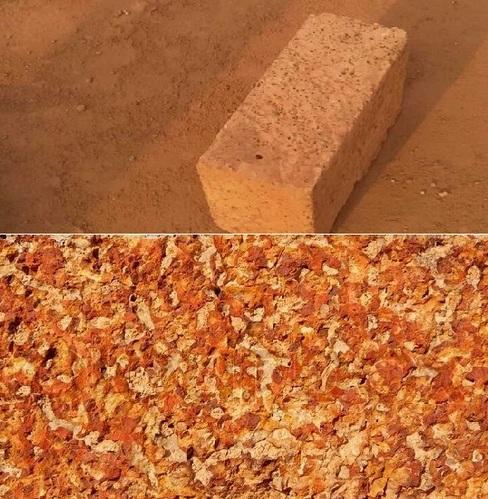
This study focuses on the valuation and optimization of local materials to meet the challenge of sustainable development Laterite Bricks. Faced with climate change and the preservation of the environment, research into eco-materials is necessary to reduce the energy bill while Laterite Bricks ensuring comfort and safety. The objective is to make a comparative characterization of the physico-mechanical properties of compressed earth bricks made from local materials: clay, laterite and sand. These are, on the one hand, bricks made from clay and laterite, reinforced with a percentage of sand varying between 20% and 30% in steps of 5%., were made. On the other hand, these same mixtures stabilized with 5% cement (CEM II-32.5) are also used to produce bricks. A characterization of the raw materials was made before studying the physico-mechanical properties of the bricks themselves. This involved evaluating the water absorbency and compressive strength of stabilized and unstabilized bricks. The results show that the absorptivity of stabilized clay bricks is acceptable up to 25% sand because it is less than the 15% maximum value set by Cameroonian standard NC-104: 2002-06. However, that of stabilized laterite bricks is higher than the maximum value set by the standard. The compressive strengths, for clay bricks stabilized with 5% cement and for laterite bricks with 0% sand added, are all greater than 2 MPa and therefore are acceptable. In addition, clay bricks with 20% sand and stabilized with 5% cement are recommended because they have the most optimal physico-mechanical properties.
The valuation of local materials in the construction of homes and public buildings is a necessity from a sustainable development perspective. Reducing the use of concrete for low-income countries has both environmental and economic benefits.
This work focuses on a characterization of the properties of local materials: clay and laterite for application in the building sector. The objective is to determine the physico-mechanical characteristics of clay and laterite bricks stabilized with sand and cement. This study will allow, depending on the areas and the availability of one of the materials, to get an idea of their quality and properties.
A characterization of the raw materials: laterite, clay and sand will be made from testing to assess the quality of the base materials. These tests will determine the grain size, the sand equivalent and the specific weight of the laterite and sand, the plasticity index. In addition, water absorbency and compressive strength will be determined for bricks made from mixtures (clay plus sand and laterite plus sand) stabilized with cement.